Continuity is the limit: holding a world stable with generative frames
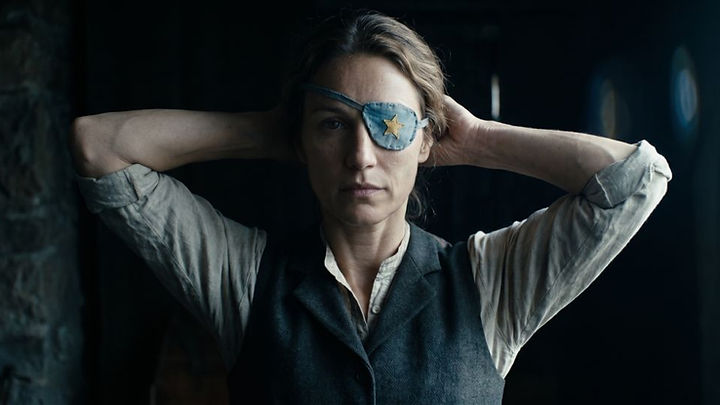
Generative frames drift. A face, a hand, a shadowline changes between cuts. The real VFX work on The Finding was not adding — it was removing the drift.
The drift
Generative frames are not photographs. Each one is a fresh interpretation. A character's face, the angle of a hand, the fall of a shadow — all of these shift between cuts, even when the prompt is identical.
On a traditional set, continuity is managed by a script supervisor and a clapperboard. On a generative set, continuity is the central problem.
What we did
The work on The Finding was not adding visual effects. It was removing the drift — holding the world stable across thirteen minutes.
- Character consistency: We established a fixed reference for each character and re-injected it into every generation. The model still drifted, but less.
- Shadow and light: Scenes were graded to a unified palette after generation, so that cuts between shots didn't feel like cuts between different films.
- Spatial continuity: Where a shot needed to match a previous one, we generated multiple variants and selected by eye, not by prompt.
What didn't work
We tried prompt-only continuity — describing the same character in the same words across shots. It failed. The model's interpretation of "a woman in a black dress" is not stable. The dress changes length, the light changes direction, the face changes age.
The honest answer: generative continuity is not solved by prompts. It is solved by selection, grading, and accepting that some drift will remain visible.
— Vincenzo Lo Re